Gamified Dashboard
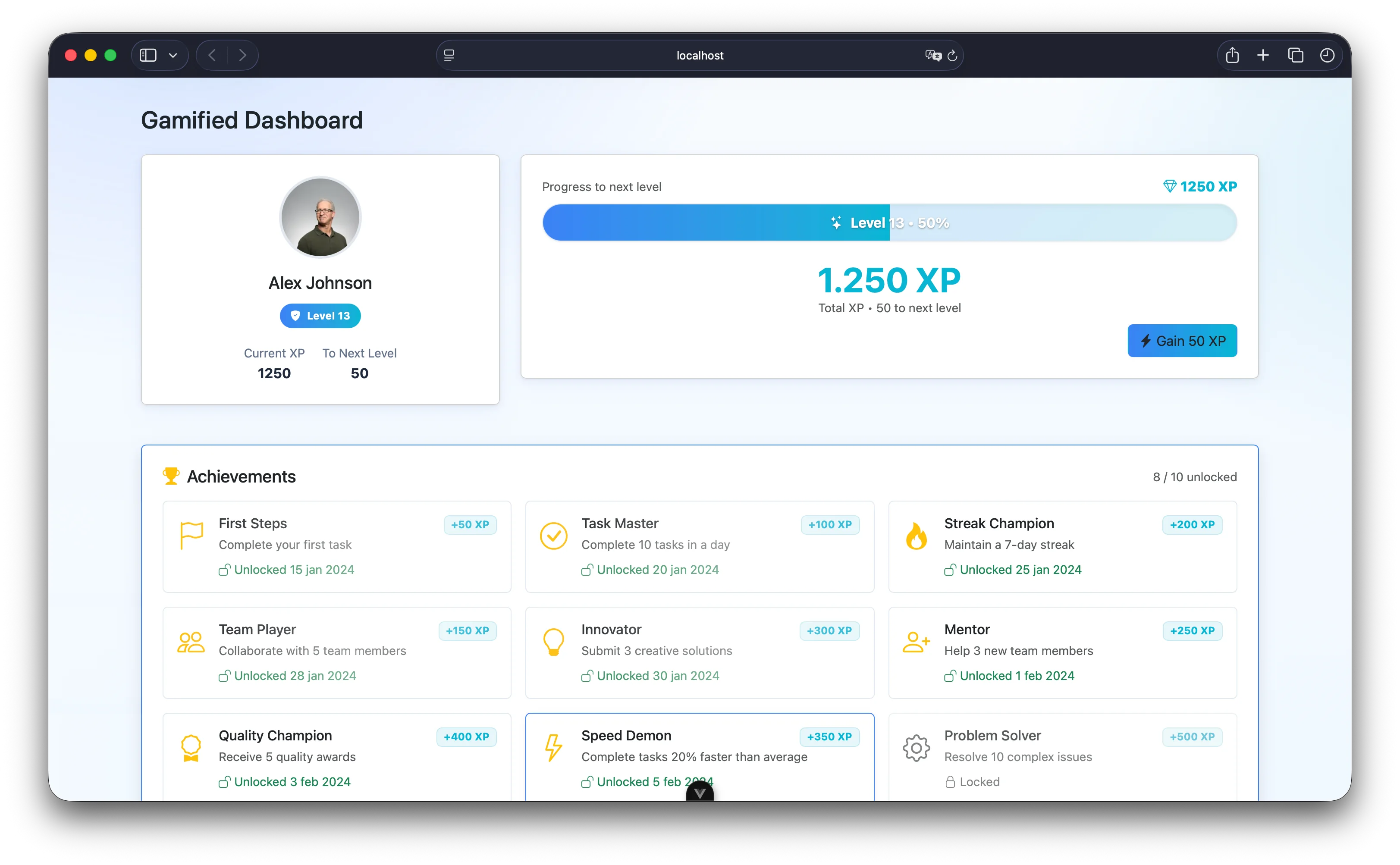
September 2025Gamified Dashboard: A modern Vue.js application featuring user profiles, XP progression, and achievement tracking with smooth animations! Designed for StriveCloud technical test for a possible internship.
About This Project
The Gamified Dashboard is an interactive Vue.js web application that demonstrates modern frontend development practices. The app features a comprehensive user dashboard with profile management, XP progression tracking, and achievement unlocking mechanics. Built with Vue 3 Composition API, TypeScript, and Pinia for state management, it showcases responsive design with Bootstrap 5 and smooth user interactions. This application was developed as part of a technical test for StriveCloud for a possible internship, demonstrating best practices for Vue.js development, TypeScript integration, state management patterns, component architecture, and modern frontend tooling with Vite.
Key Features
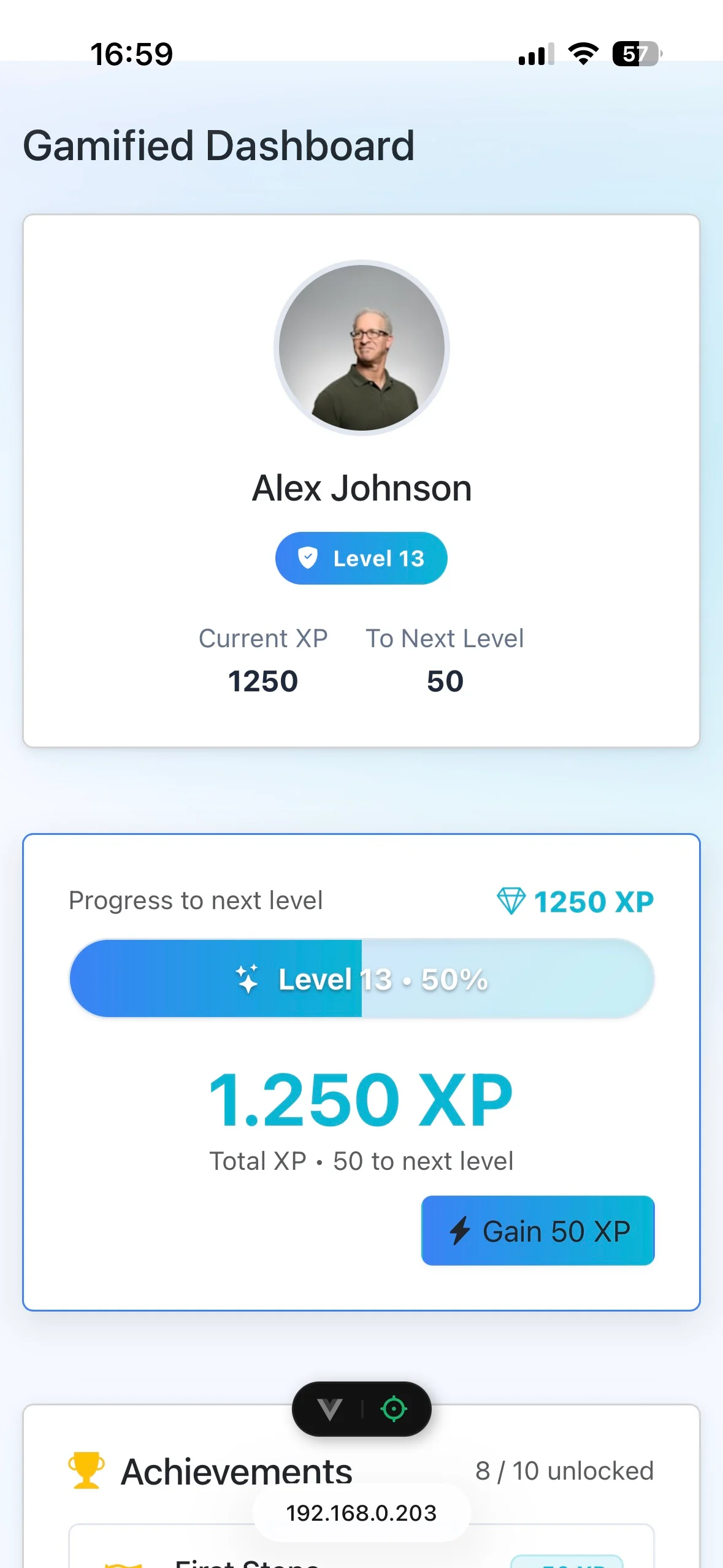
- User Profile Management: Display user information with avatar, name, level, and XP progression.
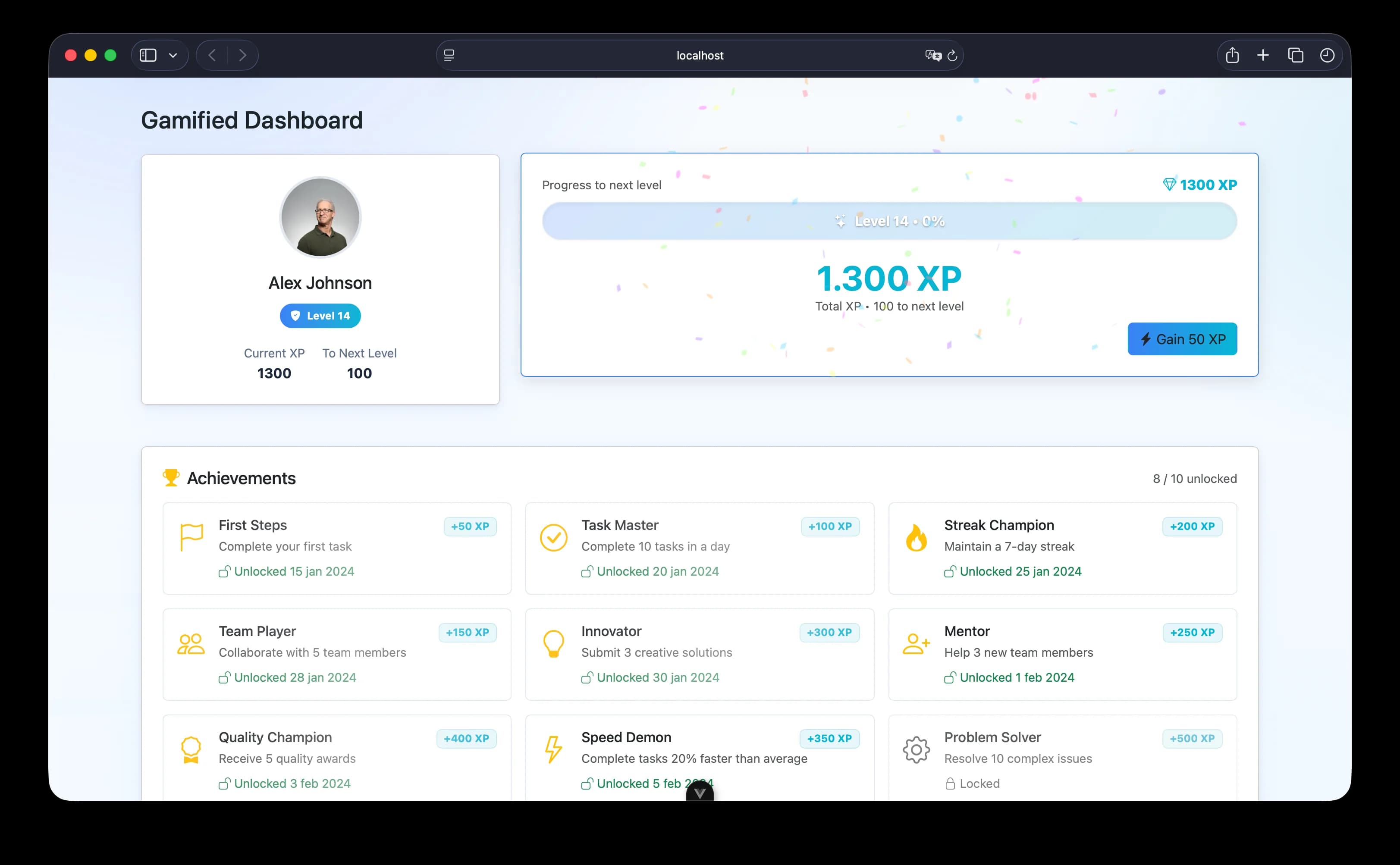
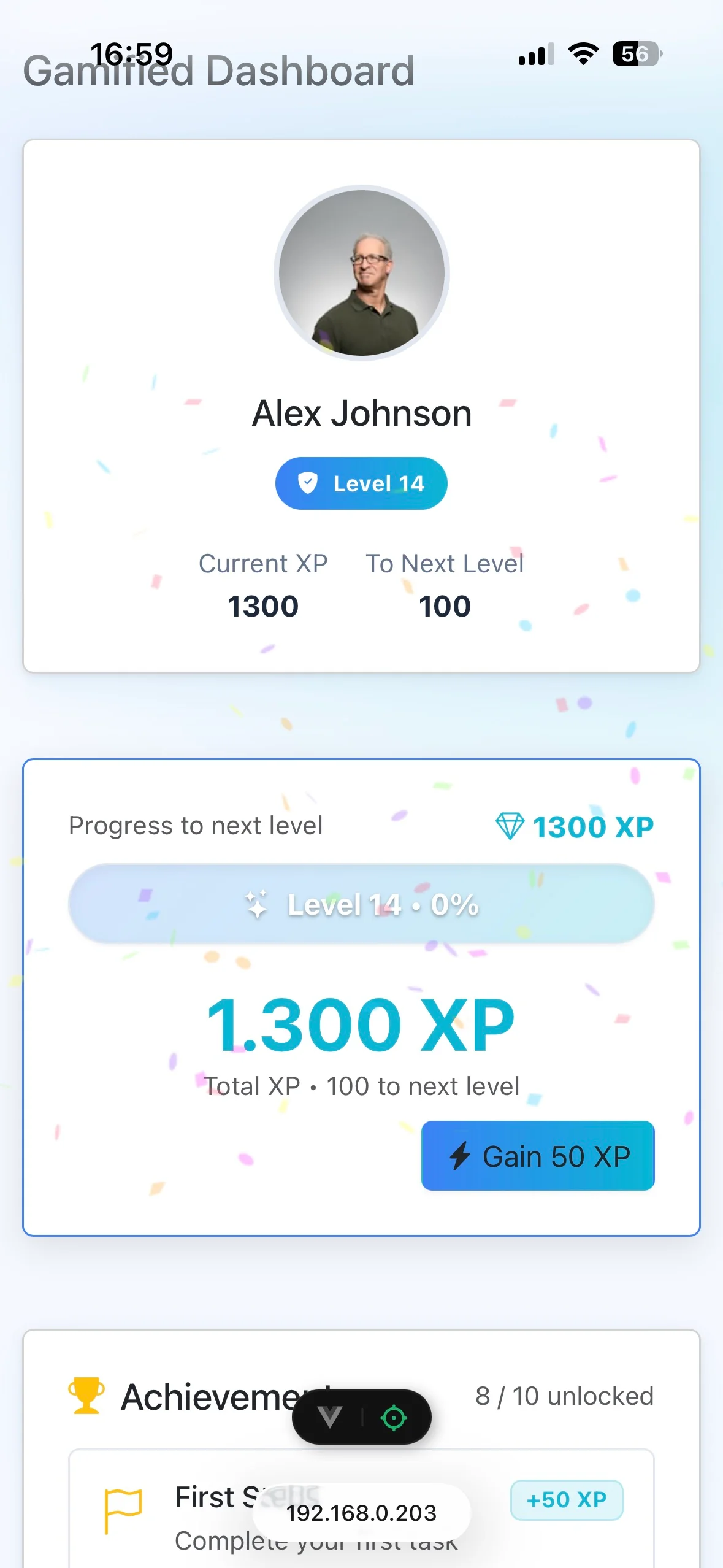
- Interactive XP System: Add XP functionality with smooth progress animations and level-up celebrations.
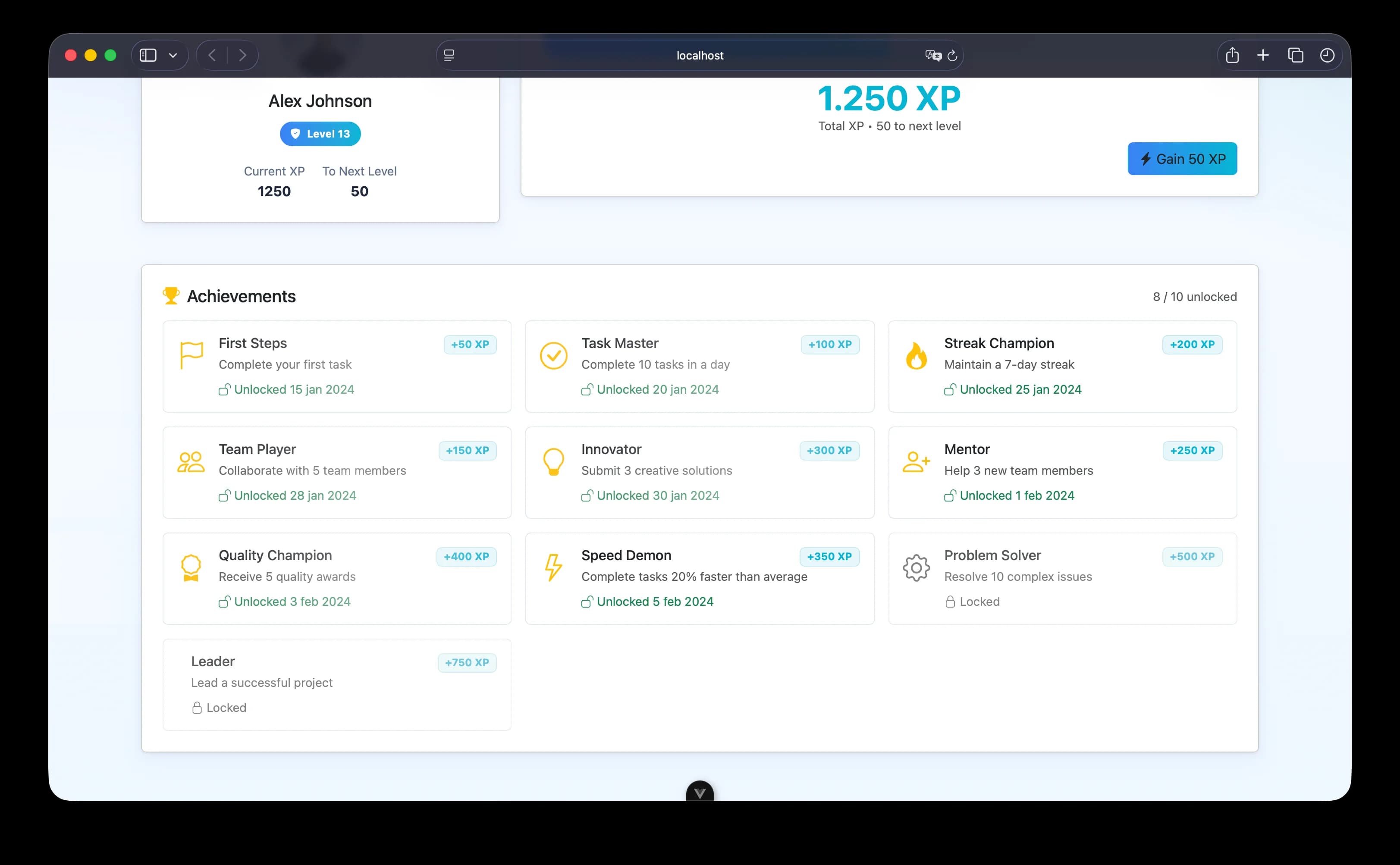
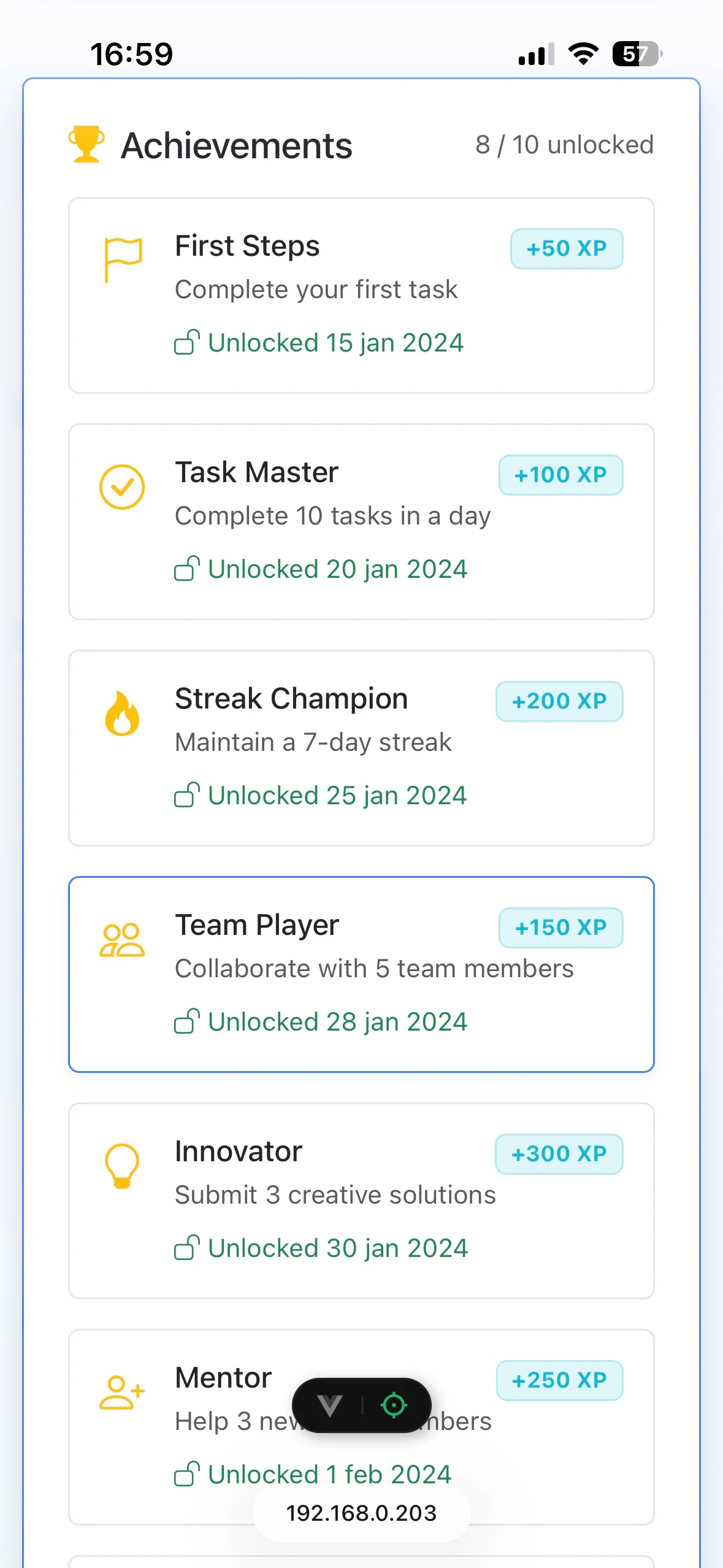
- Achievement Tracking: Grid display of achievements with locked/unlocked states and XP rewards.
- Loading States: Professional skeleton components and loading indicators for better UX.
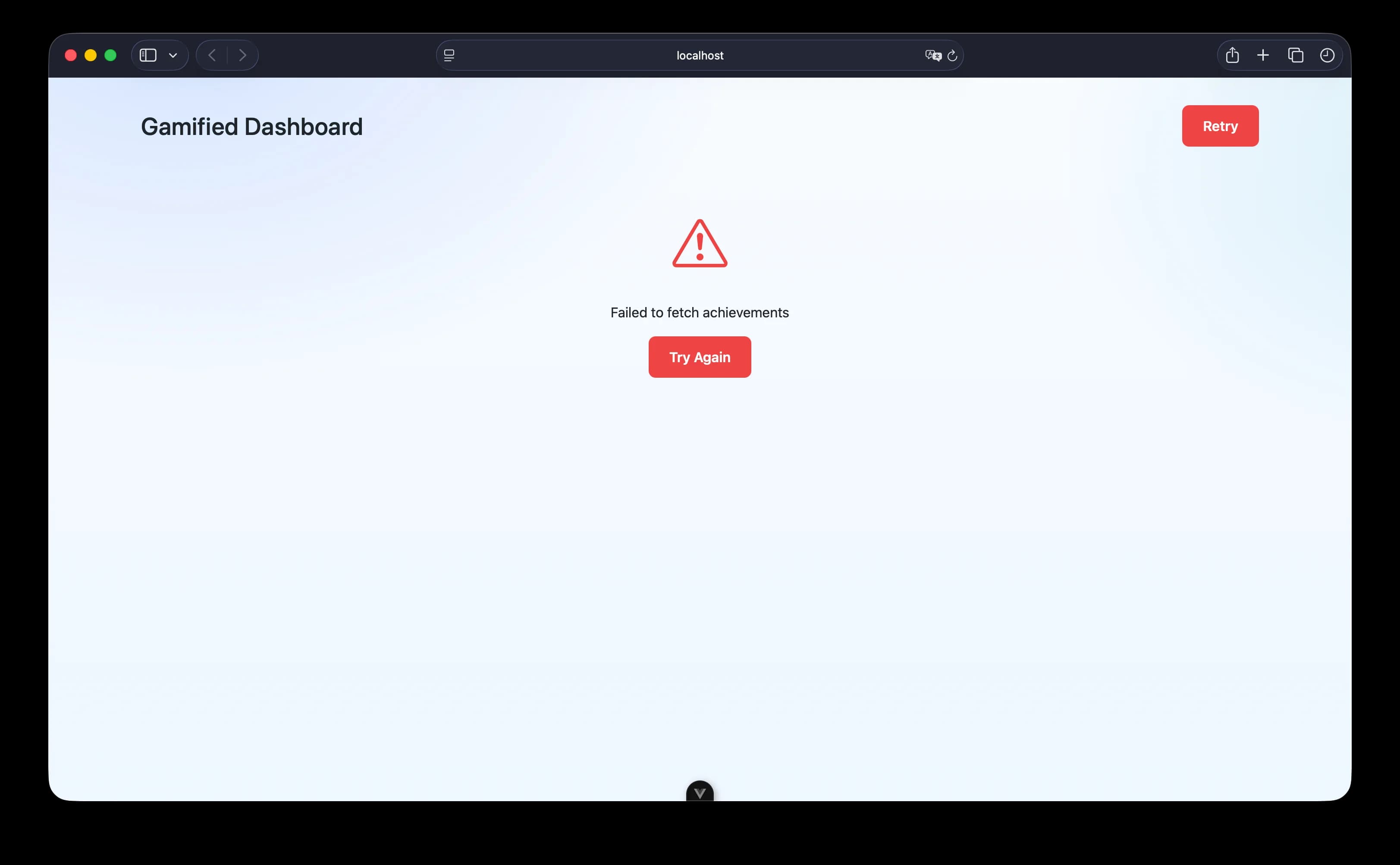
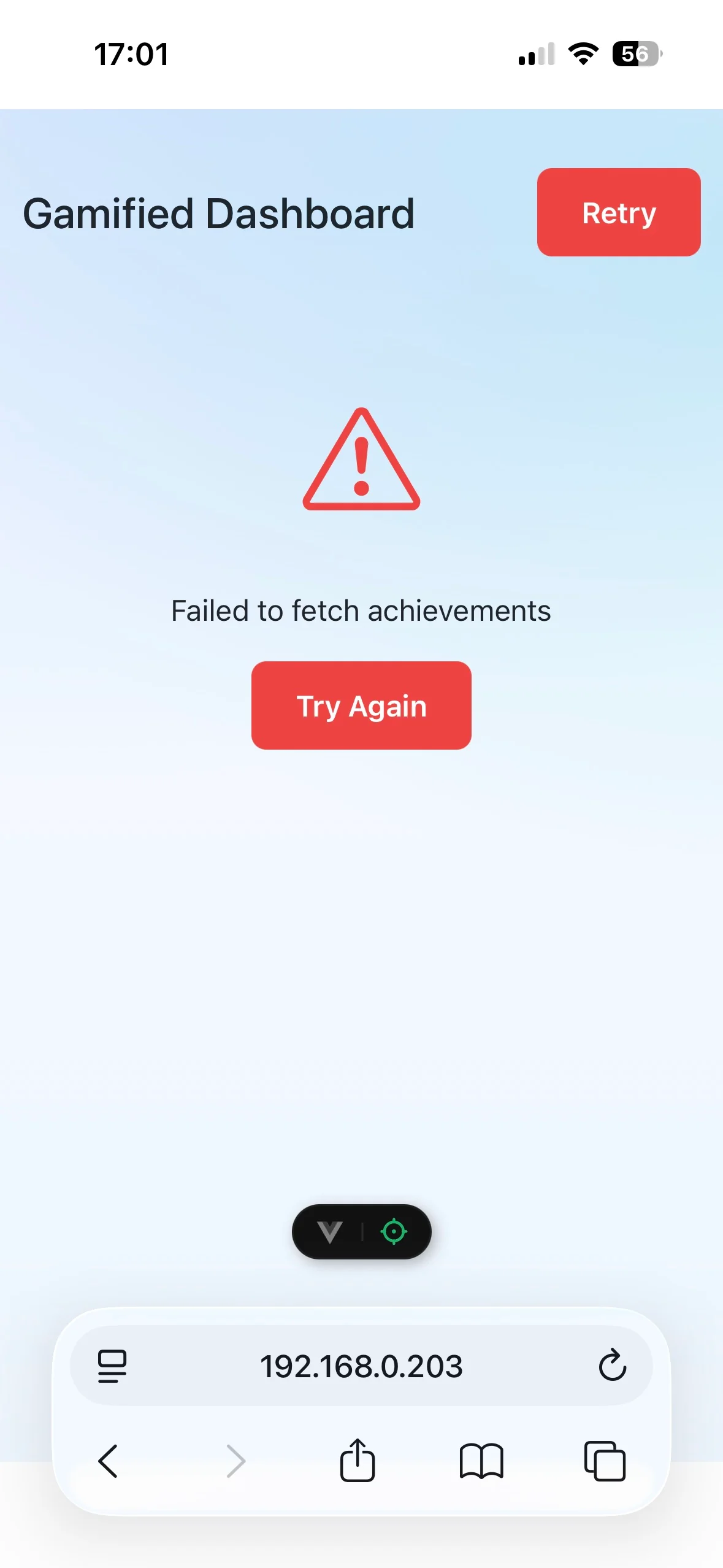
- Error Handling: Robust error management with retry functionality and user-friendly messages.
- Responsive Design: Mobile-first Bootstrap 5 implementation supporting all device sizes.
- Real-time Updates: Instant UI updates when gaining XP or unlocking achievements.
- Modern Architecture: Component-based structure with proper separation of concerns.
Challenges & Solutions
- Implementing proper TypeScript interfaces and maintaining type safety throughout the application.
- Creating smooth XP progression animations and level-up celebrations with confetti effects.
- Building reusable skeleton loading components that match the actual content structure.
- Managing complex state with Pinia including loading states, error handling, and data normalization.
- Implementing responsive design patterns that work seamlessly across mobile and desktop.
- Handling asynchronous operations with proper error boundaries and retry mechanisms.
- Creating a scalable component architecture with proper props and event handling.